by Sam Juliano
E. B. Lewis is one of America’s pre-eminent picture book illustrators. He won a Caldecott Honor for the austerely beautiful watercolor paintings in Coming On Home Soon that he negotiated in collaboration with Jacqueline Woodson, with whom he also teamed up for two extraordinary works, The Other Side and Each Kindness, the latter the winner of a Coretta Scott King Honor. His work for Nickki Grimes and others has also brought on critical acclaim. Lewis himself acknowledges in a passionate afterward, that though he had illustrated about sixty books, his assignment for All Different Now: Juneteenth, the First Day of Freedom posed the biggest challenge of his career. The plaintive nature of Angela Johnson’s spare and moving prose no doubt inspired the artist to create some of his finest work yet, at least equal to what he accomplished with Woodson.
Though All Different Now on the surface presents itself as a moment-in-history narrative, it really is not historical, but rather a book that documents the reactions of a group of people to a defining event, one that will forever change the world and the roles they play in it. The fact that it is a historical footnote does not diminish the intimacy and emotional power, as the book is about people, not symbols. Both the title and the back cover -“And nobody knew, as the sun was rising, that soon, it would all be different” suggesting nothing less than a cathartic development. The book’s cover, featuring cotton field workers with their arms raised in unbridled jubilation is the ultimate kind of triumph that leaves competitive celebration as wholly insignificant. As such it is dramatically electrifying, though pictorially beautiful. Immediately there a sensory undercurrent in the first spread that features shanty slave dwellings in the midst of a farmyard. Johnson establishes the mise en scene:
A June morning breeze off the port blew the smell of honeysuckle past the fields, across the yard………and into our room to wake us.

From the bedroom to the early morning kitchen preparation we see impoverishment but contentment with routine. Johnson builds the suspense by stating that what is going to happen is unbeknownst to those it will affect. The color scheme is sandy and brown, with an oppressive pall. The hard work in the fields, recalling the Caldecott Honor book Working Cotton, is confirmed by Johnson’s repetition, a busy landscape and one man wiping sweat on his face. One white slave owner on a horse ominously keeps a watch on the proceedings. Then it happens, and is documented in four vignettes over two pages, starting at the port and continuing to town, the countryside and onto the fields. Lewis captures incredulity, disbelief and euphoria, in appropriately muted watercolors that remarkably capture time and place evocatively. The news conveys that a Union general decreed that Texas slaves were free in belated accordance with Lincoln’s Emancipation Proclamation of two-and-a-half years earlier. Johnson’s ‘important dates’ timeline at the end of the book explains exactly how it came down:

Major General Gordon Granger arrived in Galveston, Texas on June 19, 1865, with news that the Civil War had ended and all the slaves are free. During the war, Union soldiers could not get past the Confederate troops and enter Texas to tell the slaves about the Emancipation Proclamation. Then, when the war was over and slavery was officially illegal, plantation owners still did not tell their their slaves they were free. As a result, the slaves in Texas did not know that they were free until Major General Granger’s announcement. This is why his arrival in Texas is known as the day that the last slaves were freed, and is celebrated as the first Juneteenth!

Then we see an epiphany back in the fields, with hands praying in gratitude and faces looking toward the heavens. Lewis brings in more color -blue, violet and red to denote the surge in spirit; a mother and daughter embrace in heartrending close-up, and a beach picnic furthers a celebration most thought only possible in one’s dreams. The further intrusion of color and intimate merriment extend the euphoric response to this monumental time. Several striking nocturnal tapestries feature ebullient African-Americans as free people for the very first time – Johnson joins in the beauty of the moment herself: “What was before will be no more” as one woman fans a beach fire while another poses in “Praise the Lord” stance. The muted blue tones are in sharp contrast to the desolation of the sandy browns that dominated the book’s first half. They give visual constriction to the theme of hope, though in a cautionary sense in view of all that has come before. Arguable the most stunning painting of all is the one that appears over-exposed under the moon: As we walked back home/the cool of the night/soothed our tired feet/that paddled quietly past the shadowy/fields of cotton. The blur of images – people walking with parched bare feet, some milling around in thrilled disbelief, passing by the place of decades of incarceration. The final painting showing a family setting off to a new life sends shivers down your spine, chronicling as it does the transformation of darkness to light.

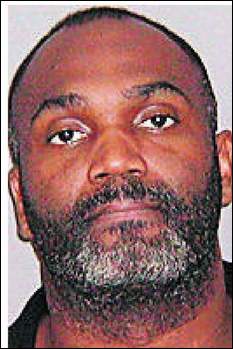
Artist E.B. Lewis
All Different Now: Juneteenth, the First Day of Freedom is a powerful enactment of a state of mind. It peals off the emotional gauze of a defining event of American history, baring the blood, sweat and tears of a lifetime. By rights it should melt the hearts of the Caldecott committee. The highest praise is in order for author Johnson and illustrator Lewis for this masterpiece of a picture book.

Author Angela Johnson
Note: This is the thirty-sixth entry in the 2014 Caldecott Medal Contender series. The series does not purport to predict what the committee will choose, rather it attempts to gauge what the writer feels should be in the running. In most instances the books that are featured in the series have been touted as contenders in various online round-ups, but for the ones that are not, the inclusions are a humble plea to the committee for consideration. It is anticipated the series will include at least 40 titles; the order which they are being presented in is arbitrary, as every book in this series is a contender. Some of my top favorites of the lot will be done near the end. The awards will be announced on February 2nd, hence the reviews will continue to the end of January.



/pic9772196.png)